NASA Sagan Fellow at U Chicago


How'd we get here?
Hey, I'm Collin
Probably Google Chrome. Or Safari. Or maybe even Firefox
I develop model predictions about planets and then I test them
atmosphere discovered on a rocky exoplanet in the habitable zone
I detected an atmosphere on a terrestrial planet in a nearby habitable zone: LHS 1140b. This represents a milestone, as it's unclear whether rocky exoplanets retain atmospheres, which are essential for life. The observation was motivated by my model predictions (see below). Consistent with my prediction, I detected a helium-dominated outflow indicating that the planet may be the first of a new class: helium worlds.




small exoplanet chemical evolution
I coupled my atmospheric escape model, IsoFATE, to the magma ocean/equilibrium chemistry model, Atmodeller and predicted an oxidation gradient spanning the radius valley. Through atmospheric fractionation and interior exchange, planets become He-, CO2/CO- and O2-enriched with increasing oxidation state.


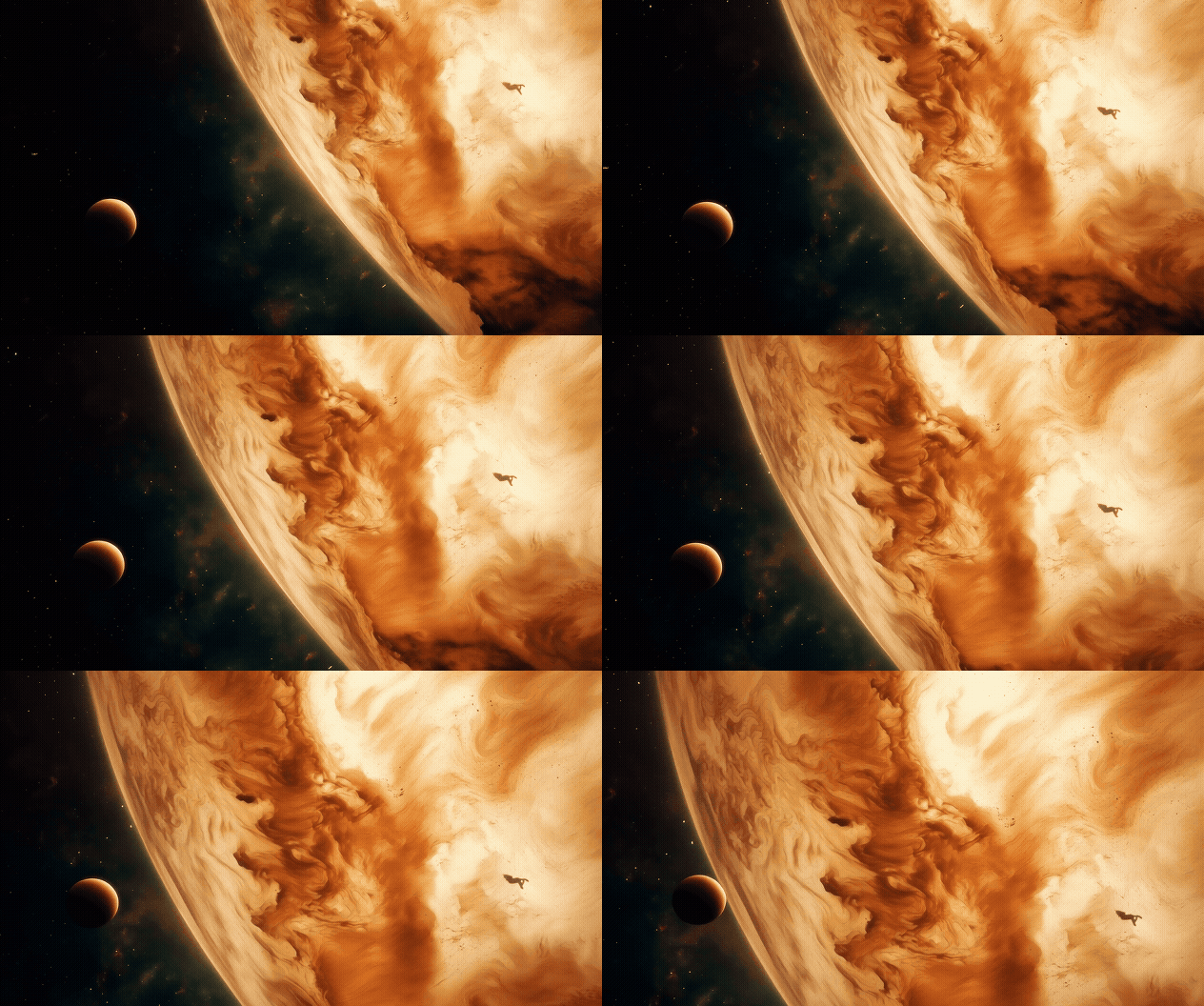
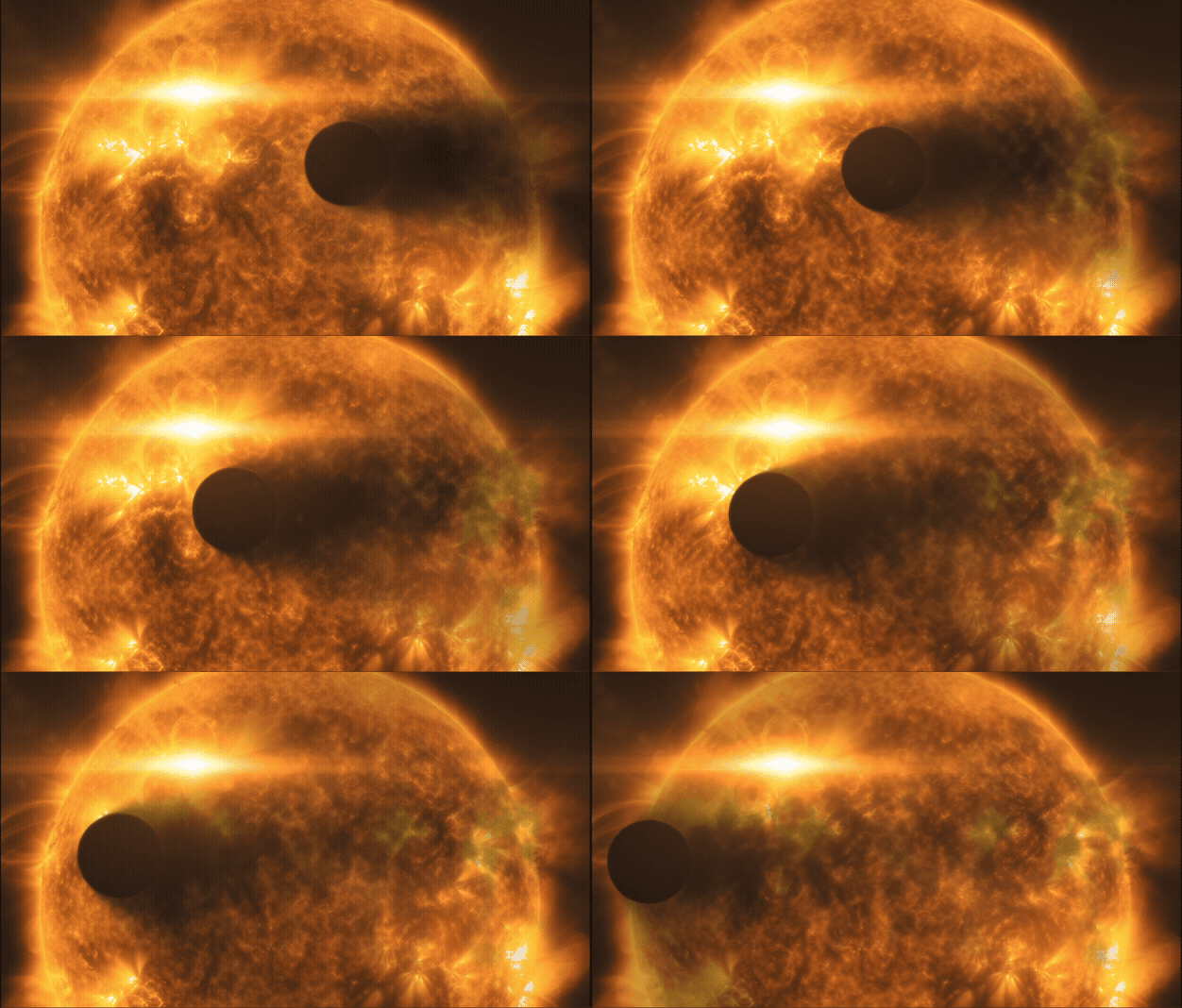
I wrote an escape code from scratch and predicted strong deuterium and helium enrichment through atmospheric fractionation for small planets near the radius valley.
deuterium/helium atmospheres



I led the discovery of TOI-1695 b, a potential water world. Through a statistical analysis of keystone planets - those with competing predictions from thermally-driven escape vs. gas-depleted formation - I showed that planet formation around low-mass stars is likely dominated by a different formation pathway than for Sun-like stars.
keystone water world discovery

linking the stellar environment to atmospheric escape
I discovered variable helium-escape from the atmosphere of the temperate terrestrial exoplanet LHS 1140b. I'm leading a survey to monitor the X-ray/UV flux of the planet's host star over a year and a half with the XMM-Newton space telescope. The goal is to test whether variable stellar flux is driving the observed variation in atmospheric helium escape.